
Wellness Wednesday with Andrea:
Have You Ever Really Looked at What You’re Eating?
Day 4 of my course, Journey to Vitality, talks about food. Not dieting. Not counting calories. Not following another complicated eating plan.
It’s about awareness.
And as I was going through the lesson again, it got me thinking about how disconnected many of us have become from the food we eat—and even from knowing what is actually in it.
When I was a child, Saturdays were grocery-shopping days in our house. We would load into the car and head to the supermarket. We picked things off the shelves, Mom brought them home, and she made our meals.
I never really thought about where any of it came from.
Sure, we had a garden out back with a few fresh vegetables, but most of our food came from the grocery store. And like most people, I assumed that if something was sitting on a grocery-store shelf, it must be perfectly fine to eat.
Over the decades, our food system changed dramatically. Farming became more industrialized, pesticides and herbicides became widely used, supermarkets grew, and convenience foods became a bigger and bigger part of everyday life.
And convenience was wonderful in many ways.
Canned foods. Boxed foods. Ready-made meals. Everything under one roof. For a busy mother feeding a family, who wouldn't appreciate that?
But somewhere along the way, convenience became ultra-processing.
Today, walk through almost any grocery store and look at how much shelf space is devoted to foods that barely resemble the ingredients they started with.
Bright packages. Intense flavours. Crunchy, salty, creamy and sweet combinations. Foods designed to taste incredibly good and make it very easy to keep eating.
Sometimes I look into grocery carts filled with pop, chips, cookies, sugary cereals and packaged meals and think, How did this become normal?
And I'm not saying that in judgment.
That used to be me.
I truly believed that if food was being sold in a grocery store, somebody somewhere had determined it was healthy enough to eat regularly.
It wasn't until my youngest daughter was in Grade 9 that I really began questioning what we were eating.
Once I started reading ingredient lists and learning more about processed food, I went home and cleaned out my pantry.
Completely.
My husband looked at everything I was throwing away and said, “Don't throw it out! That's such a waste. Give it to somebody.”
I remember saying, “Why would I want to poison someone else?” 😂
That was more than 20 years ago.
Have I eaten perfectly ever since?
Absolutely not.
But I have never gone back to not paying attention.
Once you start looking, it's very hard to stop seeing.
So take a look in your own kitchen.
What's in your refrigerator?
What's in your pantry?
How much of it is food—and how much of it is a highly processed food product?
I'm not suggesting you do what I did and throw your entire pantry into the garbage. In fact, I think there's a much easier place to begin.
Turn the package around.
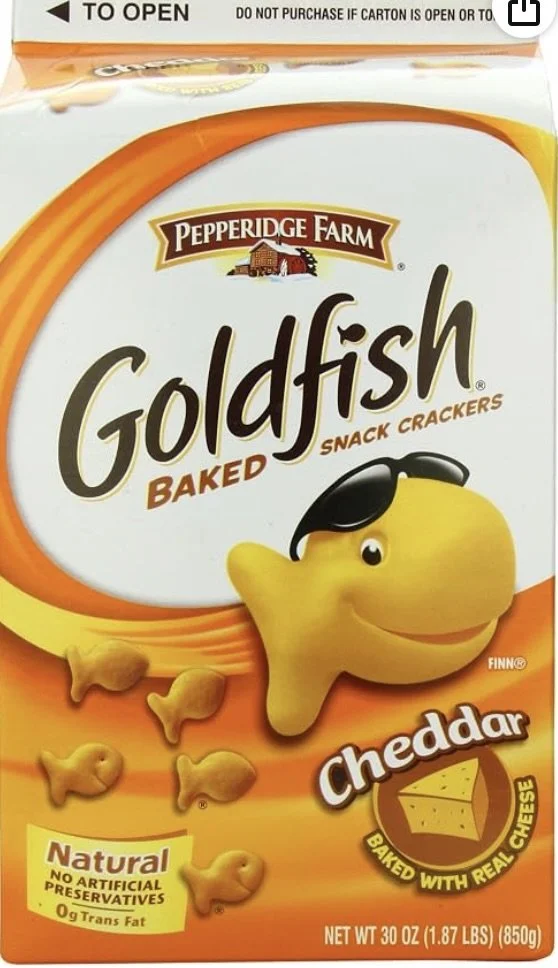
We have been trained to look at the front.
“Made with real cheese!”
“Whole grain!”
“Low fat!”
“Good source of…”
Forget the marketing for a minute.
Read the ingredient list.
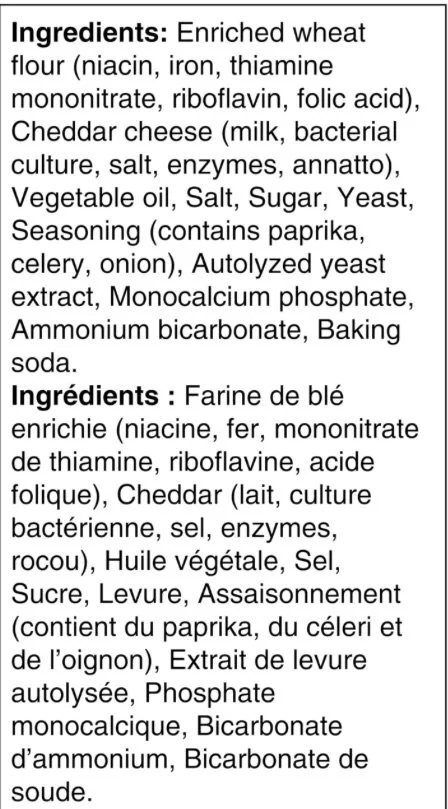
Take something as innocent-looking as Goldfish crackers. They're marketed as a fun little baked cheddar cracker, and they've been a staple in children's lunches and snack bags for years.
But turn the package around and you'll find an ingredient list that includes enriched wheat flour, cheddar cheese, vegetable oils such as canola and/or sunflower oil, salt, yeast, sugar, seasonings, autolyzed yeast extract and several leavening agents.
The point is to start noticing the difference between food that has been heavily processed and food made from a handful of recognizable ingredients.
Enriched flour, for example, is refined flour. Processing removes portions of the original grain, and certain nutrients are later added back through enrichment with synthesized vitamins and minerals.
Vegetable and seed oils are also common ingredients in ultra-processed foods. There is a lot of debate around seed oils themselves, but for me the bigger issue is how easy it becomes to consume large amounts of refined oils when they're present in crackers, chips, dressings, sauces, baked goods and packaged foods throughout the day. These seed oils are very high in omega-6 fatty acids which are known to promote inflammation in the body. Chronic inflammation leads to many diseases.
Then there are ingredients such as autolyzed yeast extract, which are used to enhance savoury flavour. Food manufacturers know that flavour, texture, aroma and that perfect combination of salty, sweet and crunchy can make processed foods extremely appealing. It’s added to make the crackers memorable for your children so they can’t stop eating them! It’s basically MSG. Did you know they feed MSG to rats in studies to make them obese? MSG is a flavour enhancer used in many processed foods to make them taste
That's no accident.
Compare that with one of my favourite crackers, La Panzanella.
The variety I buy has an ingredient list along the lines of:
Wheat flour. Extra virgin olive oil. Sea salt.
That's it.
Add a piece of good-quality real cheddar cheese and you've got a simple snack without needing a long list of additives and flavour enhancers.
And that is really my point this Wellness Wednesday.
You don't have to become afraid of food.
You don't have to throw everything away.
You don't have to eat perfectly.
But you do need to know what you're eating.
Marketing on the front of a package is designed to sell you the product.
The ingredient list on the back tells you what's actually in it.
So this week, try one thing.
Pick up something you buy regularly and turn it around.
Read every ingredient.
Look up the ones you don't recognize. Compare it with another brand. See whether you can find an option made with fewer, simpler ingredients.
Then make one small swap.
Because once you start paying attention to what's actually in your food, something changes.
You become a more informed consumer.
You start asking questions.
You start making choices intentionally instead of simply buying what you've always bought.
And when it comes to your health—and the health of your family—I think those questions are worth asking.
Your body deserves real food. Start with one small swap and go from there.
Stay Connected
I'd love to have you join me.
Sign up to receive my latest stories, simple wellness inspiration, and a little encouragement for living well along the way.
From Wellness Wednesday and Future Self Friday to our adventures renovating and living in an old school, with the Monday at the Old School Series, you'll find a little bit of everything here.
Come along for the journey. ❤️
